
Inclusion Policy
I. OVERVIEW AND PHILOSOPHY

Access to education refers to the means through which the school policy, process, and practice will ensure that students have equitable opportunities to benefit from their educational experiences with a holistic approach.
The Inclusion policy is an essential component in schools to ensure that all students, regardless of their diverse needs, can access and benefit from the educational opportunities provided. The National Education Policy, 2020 seeks to ensure “inclusive and equitable quality education and promote lifelong learning opportunities for all”.
The International Baccalaureate states that, “Inclusion is an on-going process that aims to increase access and engagement in learning for all students by identifying and removing barriers. This can only be successfully achieved in a culture of collaboration, mutual respect, support and problem solving. Inclusion is the learner profile in action, an outcome of dynamic learning communities.”
According to the SEN code of practice (2001), “ A child has special educational needs if he or she has a learning difficulty which calls for special educational provisions to be made for him or her.” A child has a learning difficulty if he or she has
(a) significantly greater difficulty in learning than the majority of children of the same age;
(b) disability which either hinders or prevents the child from making use of educational facilities of a kind provided for children of the same age in schools.
In compliance with the RTE Act, 25% of seats in the entry-level class are reserved for children from economically weaker sections, disadvantaged groups, and children with disabilities.
Ensuring support for all students with disabilities, learning difficulties, or other special needs we, at DPS, ensure that all students, regardless of their abilities or challenges can fully participate in and benefit from the academic and social experiences of the school. We support differentiation, collaboration, and individualized learning, and as such promote diversity, equality, and equal access for all learners.
Our goal is to empower students to reach their full potential and become well-rounded, proactive citizens ready to lead in an interconnected, dynamic world. We cultivate a strong, inclusive community spirit among our diverse student body. Through engaging learning experiences, we nurture critical thinking and resilience, equipping students to tackle life’s challenges with confidence and purpose. With a strong emphasis on co-curricular activities, pastoral care, and cutting-edge digital education, we are committed to shaping the future of education.

Our vision is to cultivate a school community where diversity is accepted and celebrated, and every individual feels valued, respected, and empowered to reach their full potential. We aspire to create an inclusive environment that embraces differences in culture, background, abilities, and perspectives, fostering a sense of belonging for all students, staff, and families. Together, we strive to create a welcoming and supportive learning community where all students succeed and progress in their learning journey, regardless of their boundaries to learning.

The vision will be articulated through the core values of

  • Lifelong learning
  • Respect for diversity
  • Care for community
  • Integrity of thought, speech and action
  • Open-mindedness
  • Fair and transparent standards and practices

We recognise that there is a continuum of Diverse Education Needs and that inclusion is integral to the functioning of the school system and is based on the active involvement, collaboration and support of the Learning Diversity Support Department, educators, coordinators, parents and students. DPS acknowledges that it has a role in providing opportunity, support and guidance in working with the students and families in meeting their educational needs.

We believe that every learner should be supported to attain the highest level of their potential and become confident learners. Education, at large, becomes more inclusive when the nature of pedagogy, curriculum and assessment is aimed at each and every student – student-centric. The students are offered full access to a broad, balanced and relevant education, including an appropriate curriculum.

Diversity in all its forms, including students with special needs, is a key driving force for students to develop intercultural awareness and become internationally minded. In the school community, diversity contributes to the vibrant nature and environment of the school.

Principles of Teaching for Learning Diversity
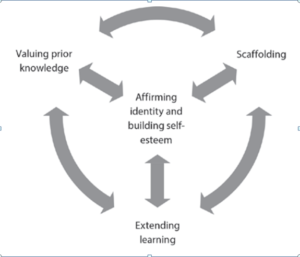
The four principles of good practice in the IB learning cycle.

(Learning diversity and inclusion in IB programmes, December 2018)

Affirming Identity and Building Self-Esteem

A supportive learning environment begins with acknowledging every learner’s individuality. DPS New Chandigarh promotes a culture of inclusion by celebrating diverse strengths, recognizing achievements, and nurturing each child’s sense of belonging. Through personalized learning experiences, constructive feedback, and meaningful opportunities for student leadership, learners develop confidence, resilience, and a strong sense of self that is essential for successful learning.

Valuing Prior Knowledge

Understanding what students already know is central to designing meaningful learning engagements. Teachers intentionally draw on learners’ existing skills, interests and experiences to build connections and deepen understanding. This approach boosts confidence and ensures that new learning is relevant, purposeful and developmentally appropriate.

Scaffolding

Effective scaffolding is grounded in awareness of students’ prior learning. Teachers introduce concepts through carefully sequenced steps that support learners’ progress toward independence. Strategies such as pre-teaching key concepts, modelling, hands-on experiences, chunking information and using visual aids and organizers help make learning accessible and responsive to individual needs.

Extending Learning

Teachers extend learning by maintaining high expectations for all learners and designing engaging, learner-centred experiences. Collaborative planning ensures that learning opportunities are rich, rigorous and inclusive. Alongside academic challenge, teachers cultivate supportive social and emotional conditions that honour diversity and help students thrive as confident and reflective participants in the learning community.


Extending learning for all

IB approaches to teaching and learning

Teaching to learner variability

Creating optimal learning environments

Assessment

Collaboration

Technology


(Learning diversity and inclusion in IB programmes, December 2018)


Purpose of the Learning Diversity Support team (LDS)

The Learning Diversity Support Team at DPS New Chandigarh is dedicated to ensuring that every student has equitable access to meaningful learning and holistic development. The team provides remedial support, personalised academic assistance and counselling services to students across the school. The LDS team consists of the Wellbeing & Inclusion Counsellor and the Learning Diversity Support Facilitator, who work in close collaboration with teachers, school leaders and families to foster a safe, inclusive and supportive learning environment.

Role of the Wellbeing & Inclusion Counsellor

The wellbeing and inclusion counsellor plays an essential role in supporting the emotional, social and personal development of students. The counsellor helps learners understand and manage their emotions, build positive relationships and develop resilience, contributing to a safe and supportive school environment. Through classroom observations, referrals and ongoing collaboration with teachers and parents, the counsellor identifies students who may require additional guidance and provides timely interventions. Their work ensures that the social and emotional well-being of every learner is prioritised, creating conditions in which students feel valued, secure and confident in their ability to grow and succeed.

Role of the Learning Diversity Support Facilitator

The learning diversity support facilitator plays a key role in promoting an inclusive environment and ensuring that students with varied learning needs receive personalised support. Working closely with educators, the facilitator helps plan and implement instructional adaptations using a range of teaching materials, strategies and assessment approaches so that learning is accessible to all students. The facilitator supports teachers in designing differentiated learning experiences and in providing appropriate classroom accommodations based on each learner’s strengths and needs.

A core responsibility of the facilitator is the development and implementation of individual education plans (IEPs) for students who require targeted interventions. They also maintain regular communication with parents and collaborate with external specialists when additional expertise is needed. Through this coordinated approach, the facilitator ensures that students receive consistent, meaningful and well-aligned support throughout their learning journey.

Why DPS New Chandigarh Needs a Learning Diversity Support Team

A dedicated Learning Diversity Support Team strengthens the school’s commitment to inclusion and ensures that:

  • students receive early identification and timely intervention for academic, behavioural or emotional needs
  • teachers are effectively supported in implementing differentiation and inclusive learning practices
  • students with learning difficulties receive structured guidance and accommodations
  • communication between school and families is consistent, transparent and supportive
  • the social, emotional and academic aspects of learning are addressed cohesively
  • all learners feel respected, understood and empowered to achieve their best
  • the school upholds its core values of equity, compassion and excellence in education

Support Through Curriculum and Assessment

This policy ensures that curriculum planning and assessment practices consider each learner’s unique needs and challenges. Teachers and the LDS team work together to design inclusive learning engagements, apply differentiated strategies and plan assessments that reflect students’ strengths. These collaborative efforts enhance student motivation, broaden perspectives and contribute to positive learning outcomes for all.

At DPS New Chandigarh, we follow a systematic and thoughtful approach to understanding learner needs. Before identifying specific learning difficulties, the school carefully examines factors that may influence student performance. This includes reviewing a child’s language proficiency, any gaps caused by inconsistent schooling, extended absences, or transitions between curricula, and any medical considerations that may affect learning. Addressing these foundational aspects ensures that the identification of learning needs is accurate, responsible and student-centered.

In accordance with government guidelines that recommend formal clinical diagnoses for learning difficulties after Grade 3 or eight years of age (whichever is later), the school prioritizes early observation and timely intervention. We aim to identify early indicators and begin supportive measures promptly, helping students receive the assistance they need at the right time. Our inclusion practices reflect a commitment to proactive support and an environment where individual growth is valued.

The school provides a continuum of support options to meet diverse learning needs. These include in-class strategies, small-group sessions, short-term remedial support, counselling when required and referrals to external specialists for focused assessments or therapies. One-on-one sessions are offered to students needing targeted and intensive reinforcement in specific areas.

All newly appointed teachers participate in an induction programme that introduces them to the school’s inclusion practices, their role in differentiation and the expectations for creating inclusive classrooms. Ongoing professional development sessions further support teachers in using differentiated strategies and inclusive instructional approaches effectively.

Categories of support

DPS New Chandigarh provides support to learners across a range of needs, including:

Students with learning disabilities:
Support for students facing challenges in reading, writing or numeracy, including those identified with dyslexia, dysgraphia, dyspraxia or dyscalculia. Accommodations and structured interventions are offered to help them progress confidently.

Students with physical disabilities:
Adjustments to the school environment and facilities ensure accessibility and enable students with physical challenges to participate fully in school life.

Students with speech and language needs:
Students with difficulties in speech, articulation or receptive and expressive language receive specialised strategies and referrals for further support.

Students with cognitive or developmental delays:
Learners with mild cognitive or developmental needs receive modified expectations, structured support and, where necessary, alternative pathways for demonstrating learning.

Students with Attentiondifficulties (ADD/ADHD):
Classroom strategies, behaviour plans and additional guidance are provided to help students regulate attention, remain engaged and succeed academically.

English Language Learners (ELLs):
Students learning English as an additional language receive language development support and classroom accommodations to help them access the curriculum.

Students with behavioural challenges:
Behaviour support plans and positive reinforcement strategies are used to promote constructive behaviour and create a calm learning environment.

Students with social and emotional needs:
Counselling, mentoring and well-being programmes help learners develop emotional resilience and positive coping strategies.

Students with sensory impairments:
Students with mild to moderate sensory challenges receive accommodations, tools and modified approaches to support participation in learning.

Students with Autism Spectrum Disorders (ASD):
Structured routines, visual supports and personalised strategies help learners with ASD feel secure and succeed across learning environments.

Students with Auditory Processing Disorders (APD):

Students with APD are supported through visual aids, structured instructions, reduced background noise, and assistive listening strategies to strengthen comprehension and engagement.


Students with mixed or multiple needs:
A combination of any of the above mild to moderate needs is addressed through a coordinated plan involving the LDS, homeroom teachers and subject specialists.

Students with behavioural challenges:

Support is provided through structured behavioural strategies that help students manage their emotions, follow routines and make positive choices. Individual behaviour plans, consistent guidance and collaboration between teachers and the wellbeing and inclusion team ensure that students feel supported and are able to participate successfully in the learning environment.


Nature of learning support

Mild support:
It is offered when the learner faces challenges in either language or mathematics, manifesting in areas like comprehension and sequencing at a mild level of auditory and visual processing through accommodations, teacher consultations, in-class assistance or targeted small-group instruction.


Moderate support:
It is offered to students with specialised needs in language and mathematics, manifesting in areas like comprehension and sequencing at a moderate level of auditory or visual processing. Sometimes these challenges are coupled with potential co-morbidities like attention deficits or behavioural concerns. At DPS, we offer co-teaching, small group support ensuring a comprehensive approach to cater to the child’s unique learning needs.

Intensive support:
It is offered to students with cognitive or developmental disabilities in the form of modifications and potential alternative credentials. Modifications are provided when students experience difficulty reaching the grade level standards or are beyond the grade level standards and can include changes to the level, content or medium of instruction.

If needed, Learning support teacher /School counsellor advise parents for psycho-educational assessments. On the basis of the reports, LDS team offers support

Referral process in PYP 

If the observation only requires intervention for certain period of time to fill the gaps, then LDS team creates IDP in collaboration with parents and offers remediation

Referral process in middle school


Assessment

Assessment in an inclusive setting is used to observe, screen and analyse student progress so that learning needs can be identified early. It enables teachers to recognise learners who may require additional support or specific accommodations. As an early intervention tool, assessment helps educators address challenges proactively, adapt instruction to individual needs and ensure that every student can participate meaningfully in the learning process. Regular screening and continuous monitoring ensure that students with diverse learning needs receive timely and appropriate support.

Accommodations (access arrangements)

Accommodations are adjustments that help students access instruction and demonstrate their learning without altering grade-level expectations. These changes may relate to how information is presented, how tasks are completed or the conditions in which assessments occur. Accommodations support equity by ensuring that learners with varied needs have suitable opportunities to show their understanding.

Examples of accommodations include:

  • extra writing time (up to 25%)
  • the use of a scribe, reader, prompter or communicator
  • a practical assistant or aide
  • speech-to-text or text-to-speech software
  • assistive technology
  • modified paper formats
  • appropriate seating arrangements
  • allocation of a separate room when required

In classroom learning, accommodations may also involve chunking tasks, providing success criteria, offering extended time, supplying model examples, giving constructive feedback, distributing guided notes, adjusting seating, or using simple supporting tools such as phonic phones or fine-motor aids. These strategies benefit not only students receiving support but enhance learning for all.


Modifications

Modifications are applied when a student is unable to meet grade-level expectations, even with accommodations. They involve altering learning outcomes, assessment expectations or curriculum content to align with the learner’s current level of readiness. Modifications are developed collaboratively through the student study team and are formalised in an Individualised Learning Plan (ILP).

Modifications may include:

  • simplifying or adapting curriculum content
  • adjusting the complexity or quantity of tasks
  • offering alternative ways to demonstrate understanding
  • providing multiple means of engagement and representation

These changes ensure that students with significant academic gaps receive a fair, meaningful and accessible learning experience.

Curriculum adaptations and Differentiation

Curriculum adaptations ensure that students with diverse educational needs can access learning in a meaningful way. This may involve modifying activities, adjusting instructional methods, or offering varied forms of assessment.

Differentiation supports this by recognising each learner’s strengths, challenges and preferred ways of learning. Teachers plan for balanced groupings, varied resources such as leveled reading material, enrichment tasks and targeted strategies that enable all students to engage successfully and work towards personalised goals.

Universal Design for Learning (UDL)

It is a framework aimed at optimising teaching and learning for all individuals by ensuring that learners with diverse needs gain access to the general education curriculum.

Three principles of the UDL network:

  • Multiple means of Representation (the what of learning): Offering information in different formats to cater to diverse learning styles.
  • Multiple means of Action and Expression (the how of learning): Allowing learners to demonstrate their knowledge in various ways.
  • Multiple means of Engagement (the why of learning): Providing various ways to motivate and engage learners.


Individualized Education Programme (IEP),  Individualized Development Plan (IDP) and IndividualBehaviour Plan (IBP)


An Individualised Education Plan (IEP) is a customised plan that caters to the distinct learning requirements of a student, particularly those with special educational needs or disabilities. Students with diagnosis receive an IEP (Individualised Education Plan) that encompasses academic areas, socio-emotional development, activity subjects and all areas of learning at school.

An Individualised Development Plan (IDP) is a supportive tool designed to provide tailored strategies to address the unique strengths, needs, and aspirations of every student. It ensures that all learners, including those with diverse academic, social, emotional, and behavioral needs, are given equitable opportunities to be included, empowered, and supported within the school community.

An IndividualisedBehaviour Plan (IBP)  provides targeted strategies and goals to help a student manage behavioural challenges. Developed collaboratively by teachers and the wellbeing and inclusion team, it offers consistent guidance and positive supports to improve the student’s self-regulation and engagement in school.                                                                                               

The IEP,IDP and IBP outlines specific, measurable, achievable, relevant, and time-bound (SMART) goals, accommodations, modifications, and support strategies.


Key components include:

  • Collaboration: Developed in partnership with teachers, parents, and support staff.
  • Personalisation: Tailored to meet the student’s unique needs and learning style.
  • Access to curriculum: Ensures equal access to the curriculum and assessments.
  • Progress monitoring: Regular review and update of the plan to track student progress and adjust strategies as needed.
  • Assessment accommodations: Modifications to assessment procedures, such as extra time, use of assistive technology, or a separate room, to ensure fairness and equity.
  • Learning support: Provision of additional resources, such as learning support assistants, speech therapists, or occupational therapists, to support the student’s learning needs.
  • Technology integration: Use of assistive technology, such as text-to-speech software or speech-generating devices, to facilitate learning and communication.
  • Communication strategies: Development of strategies to support communication between the student, teachers, and parents, such as regular progress updates or meetings.
  • Inclusion and participation: Opportunities for the student to participate in all aspects of school life, including extracurricular activities and social events.
  • Student empowerment: Encouragement of self-advocacy and self-awareness, enabling the student to take an active role in their learning and decision-making processes.
  • Parent and teacher support: Provision of training and resources for parents and teachers to support the student’s learning needs and implement the IEP effectively.
  • Regular review and evaluation: Scheduled reviews of the IEP to assess progress, identify areas for improvement, and make necessary adjustments to the plan.


All the plans promote an inclusive learning environment, enabling students to reach their full potential.


Communication

The learning support department maintains clear, open and ongoing communication with teachers, parents and learners. This collaboration promotes shared understanding, aligns expectations and ensures that support strategies are implemented consistently across learning environments.

Confidentiality

The learning diversity support team prioritises the confidentiality of all student information. Records and discussions related to learning needs are handled with sensitivity and respect. This commitment ensures that families feel secure, valued and supported throughout the learning support process.

Teachers

Teachers play a key role in creating learning environments where every student can succeed. They are expected to:

  • Create safe, respectful and trust-based classrooms that affirm student identities and encourage meaningful interaction.
  • Work in close coordination with the learning support educator to follow the student’s IEP/IDP/ILP/IBP and implement agreed accommodations and modifications.
  • Differentiate learning experiences, recognising that differentiation is inclusion in practice and is strengthened by collaborative planning.
  • Plan and review learning experiences with homeroom teachers, subject teachers and learning support educators to ensure continuity and consistency for the student.
  • Build on individual student strengths to promote confidence, self-worth and a positive approach to learning.
  • Provide additional support for class curriculum expectations where required, without penalising students for challenges related to spelling, handwriting or legibility.
  • Communicate regularly and sensitively with parents regarding student progress, strategies used, and next steps.
  • Engage in ongoing professional development to deepen their understanding of diverse learning needs and inclusive practices.

Learning Diversity SupportFacilitator/Inclusion Counsellor

Learning support educators ensure that inclusion is embedded across the school. They are responsible for:

  • Creating awareness among staff about diverse learning needs and guiding teachers in adopting responsive classroom practices.
  • Collaborating closely with teachers to plan support, discuss strategies and co-design inclusive learning experiences.
  • Providing support to students both in the classroom and through one-on-one sessions when required.
  • Leading the development, implementation and review of IEPs and IDPs in consultation with teachers, parents and students.
  • Maintaining accurate student records, documentation and communication logs while ensuring confidentiality and ethical practice.
  • Liaising with programme coordinators and external boards to facilitate access arrangements and ensure timely approvals.
  • Organising and facilitating professional learning sessions on inclusive education.
  • Reviewing the school’s inclusion practices and contributing to policy updates.

Parents

Parents are essential partners in the inclusive learning process. They are expected to:

  • Share relevant reports, observations and information that can support accurate planning for their child.
  • Participate actively in the development and revision of IEPs and IDPs.
  • Attend all review meetings and maintain regular communication with teachers and support staff.
  • Reinforce learning goals, accommodations and support strategies at home to ensure continuity.
  • Promote values of empathy, respect and acceptance, thereby reinforcing the school’s inclusive ethos.

Students

Students play an active role in their own learning. They are encouraged to:

  • Take ownership of their learning journey by participating in goal-setting, reflection and review processes.
  • Engage positively with support systems and communicate their needs, challenges and successes.

Work collaboratively with peers and contribute to an inclusive, respectful classroom environment

Links to Assessment policy

DPS New Chandigarh ensures assessments are inclusive, equitable, and reflective of diverse learning needs. Using universal design principles, assessments minimise barriers and allow multiple ways for students to demonstrate understanding, including written, oral, visual, or digital formats.

Formative, student-centered assessment practices, including co-constructed criteria and peer/self-assessment, guide learning and build confidence. Access arrangements such as extended time, assistive technologies, and alternate formats are provided based on individual development plans.

Assessments are culturally responsive and identity-affirming, and regularly reviewed with input from students, teachers, and parents to ensure fairness, relevance, and alignment with learning goals.

Links to Admissions policy

DPS New Chandigarh welcomes students from all backgrounds while maintaining transparency and fairness. Admission decisions for students with diverse needs are made collaboratively by the Admission Department, learning diversity support team, and coordinator, based on comprehensive information from parents, including diagnostic reports.

Parents must commit to supporting therapies or educational interventions. Undisclosed conditions may lead to reconsideration of admission. While the school provides inclusive support, placement considers the severity of needs and available resources to maintain a balanced learning environment for all students.

The DPS New Chandigarh Inclusion Policy came into effect from August 2025 and will be reviewed every two years or earlier as needed by the policy review committee and the Pedagogical Leadership Team (PLT).

Policy creation and first review : August 2025

Second iteration: September 2025

Third iteration: October 2025

Fourth iteration: November 2025

Framed by: Reema Sawhny, Sandeep Kaur Dhindsa, Arvinder Saini, Monica Gautam, Ashish Kumar, Nidhi Sharma

Reviewed by: All teaching staff, (student name), (parent name) and PLT

Next Review: Academic session- 2027-28 (Or as required)

Candor International School. (2022). Inclusion policy.

DPS International. (2020). Inclusion policy.

Indian Public School, Chennai. (n.d.). Inclusive policy. TIPS Policy Link.

International Baccalaureate Organization. (2013). Meeting student learning diversity in the classroom.

International Baccalaureate Organization. (2018). Access and inclusion policy.

International Baccalaureate Organization. (2020). Programme standards and practices.

Learning diversity and inclusion in IB programmes. (2018). International Baccalaureate Organization.

Ministry of Education, Government of India. (2020). National education policy 2020.

Neev Academy. (2023). Inclusion policy.

NES International School of Management. (n.d.). Inclusion policy.

Oakridge International School, Gachibowli Campus. (2021). Inclusive education policy.

Pelletier, K., Bartlett, K., Powell, W., & Kusuma-Powell, O. (2011). Inclusion in international schools: A practical guide for school leaders. ECIS: Next Frontier Inclusion.